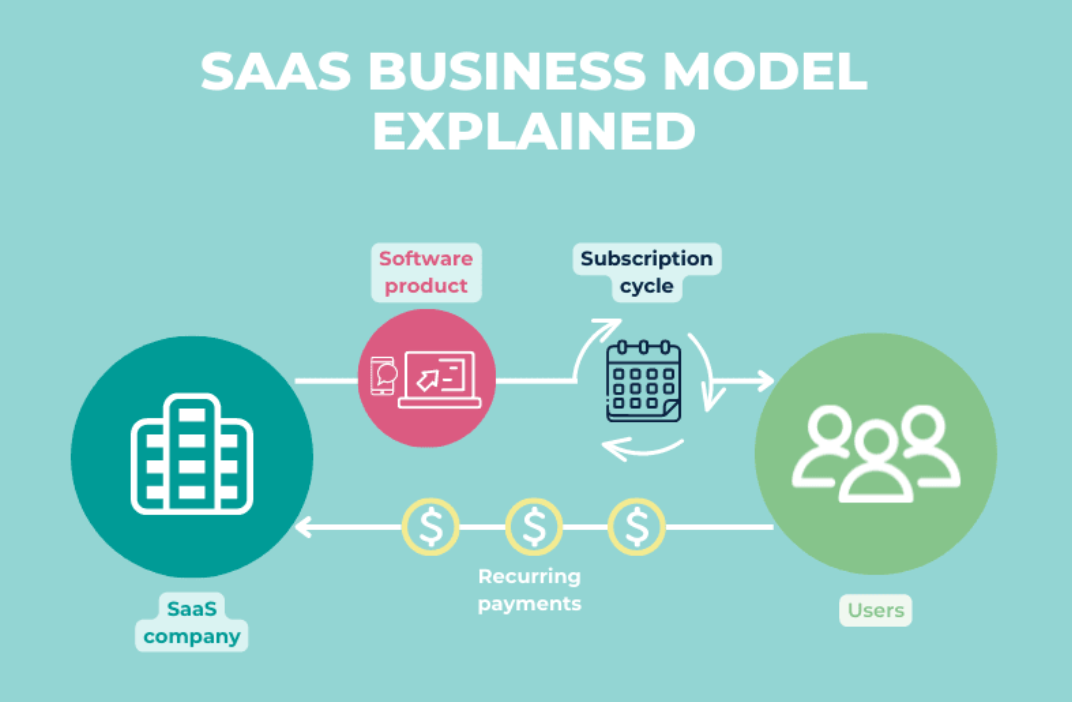
The Software as a Service (SaaS) business model has transformed the way companies build, deliver, and monetize software. Unlike traditional software that requires a one-time purchase and installation, SaaS products are hosted in the cloud and accessed via the internet—usually through a subscription. This shift has not only improved accessibility and scalability but has also introduced one of the most powerful revenue strategies in modern business: recurring revenue.
In this comprehensive guide, we’ll explore how the SaaS business model works, why it’s so effective, and how it consistently generates predictable and scalable income for businesses of all sizes.
What Is the SaaS Business Model?
SaaS (Software as a Service) is a software distribution model where applications are hosted by a service provider and made available to customers over the internet. Instead of purchasing software outright, users pay a recurring fee—monthly or annually—to access the software.
Key Characteristics of SaaS
- Cloud-based hosting: No installation required; users access via browser
- Subscription pricing: Customers pay recurring fees
- Automatic updates: Continuous improvements without manual upgrades
- Scalability: Easily upgrade or downgrade plans
- Multi-tenant architecture: One version of the software serves multiple customers
How SaaS Generates Recurring Revenue
The core strength of the SaaS model lies in its ability to generate recurring revenue—income that repeats at regular intervals.
1. Subscription-Based Pricing
The most common revenue driver is subscription pricing. Customers pay a fixed fee monthly or annually to continue using the service.
Examples of pricing tiers:
- Basic (limited features)
- Pro (advanced features)
- Enterprise (custom solutions)
This structure ensures a steady income stream as long as customers remain subscribed.
2. Customer Lifetime Value (CLV)
In SaaS, the goal isn’t just to acquire customers—it’s to retain them for as long as possible.
Customer Lifetime Value (CLV) measures how much revenue a business can expect from a single customer over time.
Formula:
CLV = Average Revenue Per User (ARPU) × Customer Lifespan
The longer a customer stays, the more profitable they become.
3. Low Customer Acquisition Cost Over Time
While acquiring customers may be expensive initially, SaaS companies recover these costs over time through recurring payments.
This is known as the CAC Payback Period, which measures how long it takes to recover the cost of acquiring a customer.
4. Upselling and Cross-Selling
SaaS businesses often increase revenue by offering additional features or services.
- Upselling: Encouraging users to upgrade to higher-tier plans
- Cross-selling: Offering add-ons or complementary tools
Example:
- Extra storage
- Premium integrations
- Advanced analytics
5. Freemium Model
Many SaaS companies offer a free version with limited features to attract users.
Once users see value, they are encouraged to upgrade to paid plans.
This model helps:
- Reduce acquisition barriers
- Increase conversion rates
- Build a large user base
6. Annual Billing Discounts
To improve cash flow and retention, SaaS companies often offer discounts for annual subscriptions.
Benefits:
- Immediate revenue boost
- Reduced churn
- Better financial forecasting
Key Metrics in SaaS Revenue
Understanding SaaS performance requires tracking specific metrics.
1. Monthly Recurring Revenue (MRR)
MRR is the total predictable monthly income from subscriptions.
Formula:
MRR = Total number of subscribers × Average monthly revenue per user
2. Annual Recurring Revenue (ARR)
ARR is similar to MRR but calculated annually.
Formula:
ARR = MRR × 12
3. Churn Rate
Churn measures the percentage of customers who cancel their subscriptions.
Formula:
Churn Rate = (Customers lost ÷ Total customers) × 100
Lower churn = higher profitability.
4. Net Revenue Retention (NRR)
NRR measures how much revenue is retained from existing customers, including upgrades and downgrades.
A high NRR (above 100%) means growth even without new customers.
Benefits of the SaaS Business Model
1. Predictable Revenue
Recurring subscriptions provide consistent and predictable income, making financial planning easier.
2. Scalability
SaaS products can scale quickly without significant infrastructure costs.
- Add more users without major expenses
- Expand globally with minimal effort
3. Lower Distribution Costs
No physical products or shipping required—everything is delivered digitally.
4. Continuous Customer Relationships
Unlike one-time purchases, SaaS businesses maintain ongoing relationships with customers, leading to:
- Better feedback
- Improved retention
- Higher lifetime value
5. Data-Driven Decisions
SaaS platforms collect valuable user data, enabling:
- Personalized experiences
- Feature improvements
- Targeted marketing
Challenges of the SaaS Model
While powerful, the SaaS model also comes with challenges.
1. High Initial Costs
Building a SaaS product requires:
- Development resources
- Infrastructure setup
- Marketing investment
2. Customer Churn
Retaining customers is critical. Even small churn rates can significantly impact revenue.
3. Competition
The SaaS market is highly competitive, requiring strong differentiation.
4. Ongoing Maintenance
Continuous updates, security, and customer support are essential.
Strategies to Maximize Recurring Revenue
1. Focus on Customer Retention
Retention is more cost-effective than acquisition.
Ways to improve retention:
- Excellent customer support
- Regular feature updates
- User-friendly onboarding
2. Optimize Pricing Strategy
Experiment with:
- Tiered pricing
- Usage-based pricing
- Value-based pricing
3. Improve Onboarding Experience
First impressions matter. A smooth onboarding process increases the likelihood of long-term retention.
4. Use Data Analytics
Track user behavior to:
- Identify churn risks
- Improve product features
- Personalize user experience
5. Build a Strong Brand
Trust and credibility play a major role in customer loyalty.
SaaS Pricing Models Explained
1. Flat-Rate Pricing
Single price for all features.
Pros:
- Simple
- Easy to understand
Cons:
- Limited flexibility
2. Tiered Pricing
Different plans with varying features.
Pros:
- Appeals to different customer segments
- Encourages upgrades
3. Per-User Pricing
Charges based on the number of users.
4. Usage-Based Pricing
Customers pay based on usage (e.g., storage, API calls).
5. Freemium Pricing
Free basic plan with paid upgrades.
SaaS vs Traditional Business Models
| Feature | SaaS Model | Traditional Model |
|---|---|---|
| Revenue | Recurring | One-time |
| Delivery | Online | Physical/download |
| Updates | Automatic | Manual |
| Scalability | High | Limited |
| Customer Relationship | Ongoing | Transactional |
Real-World SaaS Revenue Flow
Here’s how a typical SaaS revenue cycle works:
- User signs up (free trial or paid plan)
- User subscribes to a monthly plan
- Business collects recurring payments
- Customer upgrades or adds features
- Revenue increases over time
- Retained customers continue paying
The Future of SaaS Revenue Models
The SaaS industry continues to evolve with new trends:
1. AI-Powered SaaS
Artificial Intelligence is enhancing automation, personalization, and decision-making.
2. Vertical SaaS
Industry-specific SaaS solutions (e.g., healthcare, finance).
3. Micro-SaaS
Small, niche SaaS businesses targeting specific problems.
4. Usage-Based Billing Growth
More companies are shifting to pay-as-you-go models.
5. API Monetization
Charging developers for API access is becoming a major revenue stream.
Why Investors Love SaaS
SaaS companies are highly attractive to investors due to:
- Predictable revenue streams
- High margins
- Scalability
- Strong customer retention potential
Companies with high growth and low churn often receive premium valuations.
Conclusion
The SaaS business model has revolutionized how software companies generate revenue. By leveraging subscription-based pricing, focusing on customer retention, and continuously delivering value, SaaS businesses create reliable and scalable income streams.
Recurring revenue is the backbone of this model, allowing companies to forecast growth, invest confidently, and build long-term customer relationships.
Whether you’re a startup founder, developer, or entrepreneur, understanding the SaaS model is essential in today’s digital economy. With the right strategy, tools, and execution, SaaS can be one of the most profitable and sustainable business models available.
Final Thoughts
Success in SaaS isn’t just about building great software—it’s about creating a system that continuously delivers value and keeps customers engaged over time. Focus on solving real problems, optimizing user experience, and building trust, and the recurring revenue will follow.