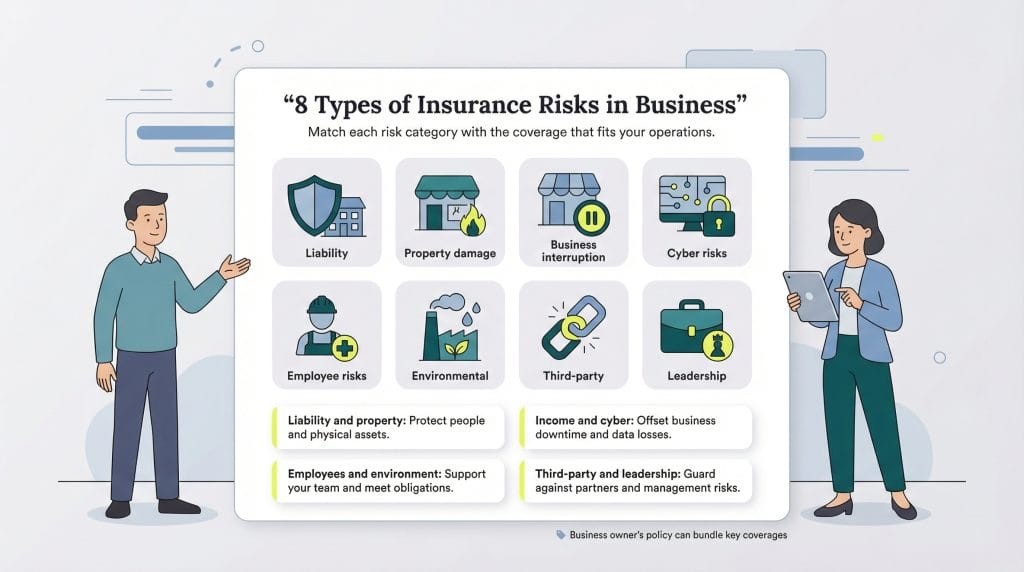
In today’s unpredictable business environment, risk is unavoidable. Whether you run a small startup, a growing online business, or a large enterprise, your company faces potential threats every day—from financial losses and legal liabilities to cyberattacks and natural disasters. This is where business insurance plays a critical role.
Understanding how business insurance supports risk management is essential for protecting your company’s assets, ensuring continuity, and achieving long-term success. In this comprehensive guide, we’ll explore the connection between insurance and risk management, explain key concepts in simple terms, and show how you can use insurance as a powerful strategic tool.
What Is Risk Management?
Risk management is the process of identifying, assessing, and controlling potential risks that could negatively impact your business.
In simple terms:
Risk management means preparing for what could go wrong and minimizing its impact.
It involves:
- Identifying risks
- Evaluating their likelihood
- Implementing strategies to reduce or manage them
Every business, regardless of size or industry, needs a solid risk management plan.
What Is Business Insurance?
Business insurance is a financial tool that protects your company from losses caused by unexpected events. Instead of bearing the full cost of a risk, you transfer part of that risk to an insurance provider.
Insurance is a key component of risk management because it helps absorb financial shocks.
The Relationship Between Risk Management and Insurance
Risk management and insurance go hand in hand.
Think of it this way:
- Risk management = identifying and reducing risks
- Insurance = providing financial protection when risks occur
Insurance does not prevent risks from happening, but it ensures that your business can survive when they do.
Types of Business Risks
To understand how insurance helps, you need to know the types of risks businesses face.
1. Operational Risks
These include:
- Equipment failure
- Human error
- Supply chain disruptions
2. Financial Risks
Examples:
- Cash flow problems
- Market fluctuations
- Unexpected expenses
3. Legal Risks
These involve:
- Lawsuits
- Contract disputes
- Regulatory penalties
4. Strategic Risks
Such as:
- Poor business decisions
- Competition
- Industry changes
5. Hazard Risks
These are physical risks like:
- Fire
- Flood
- Theft
- Natural disasters
6. Cyber Risks
In today’s digital world:
- Data breaches
- Hacking
- System failures
How Business Insurance Supports Risk Management
Let’s explore the specific ways insurance strengthens your risk management strategy.
1. Risk Transfer
One of the most important functions of insurance is risk transfer.
Instead of your business bearing the full financial burden, the insurer takes on much of the risk.
Example:
If your business faces a lawsuit, liability insurance helps cover legal costs and settlements.
2. Financial Protection
Insurance provides a financial safety net.
It covers:
- Property damage
- Legal expenses
- Employee injuries
- Business interruptions
This ensures your business doesn’t collapse due to a single event.
3. Business Continuity
Unexpected events can disrupt operations.
Business interruption insurance helps:
- Replace lost income
- Cover ongoing expenses
- Maintain operations during recovery
This is crucial for long-term stability.
4. Legal Compliance
Certain types of insurance are legally required.
For example:
- Workers’ compensation
- Commercial auto insurance
Having the right coverage ensures compliance and avoids penalties.
5. Improved Decision-Making
When you have insurance in place, you can make business decisions with greater confidence.
You’re more likely to:
- Invest in growth
- Expand operations
- Take calculated risks
because you know you’re protected.
6. Enhanced Credibility
Clients, partners, and investors often prefer working with insured businesses.
Insurance demonstrates:
- Professionalism
- Responsibility
- Financial stability
This can open doors to new opportunities.
7. Protection Against Catastrophic Losses
Some risks are rare but extremely costly.
Examples:
- Natural disasters
- Major lawsuits
- Cyberattacks
Insurance ensures these events don’t destroy your business.
8. Support for Employee Welfare
Workers’ compensation and health-related coverage protect employees.
This leads to:
- Higher morale
- Better retention
- Reduced legal risk
Key Types of Insurance in Risk Management
Different types of insurance address different risks.
General Liability Insurance
Covers:
- Third-party injuries
- Property damage
- Legal claims
Property Insurance
Protects:
- Buildings
- Equipment
- Inventory
Business Interruption Insurance
Covers:
- Lost income
- Operating expenses during downtime
Workers’ Compensation Insurance
Provides:
- Medical coverage for employees
- Wage replacement
Professional Liability Insurance
Protects against:
- Errors
- Negligence
- Service-related claims
Cyber Liability Insurance
Covers:
- Data breaches
- Cyberattacks
- Recovery costs
Commercial Auto Insurance
Protects business vehicles and drivers.
Steps to Integrate Insurance into Risk Management
To maximize benefits, insurance should be part of a broader strategy.
Step 1: Identify Risks
List all potential risks your business faces.
Step 2: Assess Impact
Determine:
- Likelihood of each risk
- Potential financial impact
Step 3: Prioritize Risks
Focus on high-impact risks first.
Step 4: Choose Appropriate Insurance
Match coverage to your risk profile.
Step 5: Implement Risk Reduction Measures
Insurance works best when combined with:
- Safety protocols
- Employee training
- Security systems
Step 6: Monitor and Review
Regularly update your insurance and risk management plan.
Benefits of Combining Insurance with Risk Management
When used together, they provide:
- Strong financial protection
- Reduced uncertainty
- Better business resilience
- Increased confidence in decision-making
Common Mistakes to Avoid
Many businesses fail to fully leverage insurance.
Avoid these mistakes:
- Underinsuring your business
- Ignoring policy details
- Not updating coverage
- Relying solely on insurance without risk prevention
Insurance is not a replacement for good risk management—it’s a complement.
Real-World Example
Imagine you own a retail store.
Potential risks include:
- Theft
- Fire
- Customer injuries
With proper insurance:
- Property insurance covers damage
- Liability insurance covers injuries
- Business interruption insurance covers lost income
Without insurance, these events could lead to financial disaster.
The Role of Technology in Modern Risk Management
Technology is changing how businesses manage risk.
Innovations include:
- AI-based risk assessment
- Real-time monitoring systems
- Predictive analytics
Insurance companies are also using technology to offer:
- Customized policies
- Faster claims processing
- Better pricing models
Future Trends in Business Insurance
The future of insurance and risk management includes:
- Increased demand for cyber insurance
- Usage-based insurance models
- More personalized coverage
- Integration with digital platforms
Businesses that adapt to these trends will be better protected.
Why Risk Management Matters More Than Ever
In today’s fast-changing world, risks are becoming more complex.
Factors include:
- Globalization
- Digital transformation
- Climate change
- Economic uncertainty
This makes effective risk management—and insurance—more important than ever.
Final Thoughts
Business insurance is not just a safety net—it’s a strategic tool that supports effective risk management. By transferring financial risk, protecting assets, and ensuring business continuity, insurance allows companies to operate with confidence and resilience.
The key takeaway is clear:
Risk is inevitable, but financial loss doesn’t have to be.
By integrating business insurance into your risk management strategy, you can safeguard your operations, protect your assets, and focus on growth without constant fear of the unexpected.